
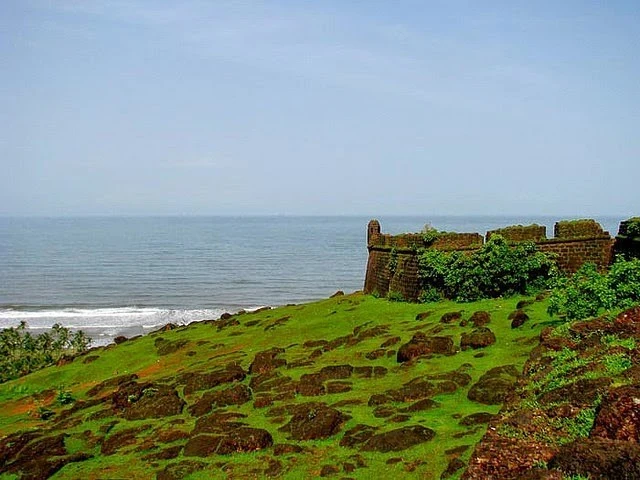
Key Takeaways
- The monsoon gives North Goa’s forts greener surroundings, dramatic skies and a quieter atmosphere, but access can change during heavy rain.
- Fort Aguada and the lower Sinquerim bastion work well as one coastal circuit.
- Reis Magos offers the most curated heritage experience, while Chapora is better suited to open coastal views.
- Corjuem and Alorna reveal a quieter inland side of North Goa.
- Tiracol requires a dedicated northern outing, with ferry and road conditions checked in advance.
- Acaso Nest’s Baga and Calangute apartments suit the Chapora and coastal belt, while Sublime Sands Beach Resort in Candolim is better placed for Aguada, Sinquerim and Reis Magos.
Why Visit North Goa’s Forts During the Monsoon?
Guests staying with us often ask whether North Goa’s major forts can be covered in one day. Technically, several can. But that is not always the best way to experience them, especially during the rains. The monsoon changes both the landscape and the pace. Laterite walls darken, hillsides turn green and the sea becomes far more dramatic. At the same time, wet stairways, reduced visibility and sudden showers make rushed sightseeing a poor idea.
Exploring the forts in North Goa is best approached through smaller routes rather than one long checklist. Aguada and Sinquerim belong together. Reis Magos can be added to a Candolim or Panaji day. Chapora works with the Anjuna–Vagator belt. Corjuem and Alorna need a separate inland plan, while Tiracol deserves its own half-day.
For travellers looking for things to do in North Goa in monsoon, these forts offer history, landscape and quieter travel, provided the weather is allowed to shape the day.
How to Plan Your Fort Trail
A monsoon fort visit begins with practical preparation. Wear shoes with a reliable grip. Carry a light rain jacket rather than relying only on an umbrella, especially at exposed coastal forts. Avoid standing close to cliff edges, wet ramparts or wave-facing rocks.
Before leaving, check:
- current opening hours;
- road and ferry conditions;
- restoration or maintenance closures;
- weather warnings;
- parking access;
- whether the route is suitable after heavy rain.
Do not assume that a break in rainfall means every path is safe. Stone, laterite and moss can remain slippery long after the sky clears. Our usual recommendation is to choose two major stops or one paired coastal circuit. The rains reward slower visits.
-
Fort Aguada

Fort Aguada is one of the easiest major forts to combine with a stay in Candolim. Built by the Portuguese in the early 17th century, it guarded the entrance to the Mandovi River and helped protect ships approaching Goa. Its name comes from the freshwater spring within the fort complex, which supplied water to vessels stopping along the coast. The upper fort includes broad laterite walls, bastions and views across the Arabian Sea and Mandovi estuary. The old lighthouse remains one of its most recognisable features, although access to individual sections may vary.
During the monsoon, the green headland and restless sea give the fort a stronger visual character. The trade-off is that the open areas offer little shelter and stone surfaces can become slippery. Guests staying at Sublime Sands in Candolim can plan Aguada as a morning visit and shorten the outing quickly if the weather changes.
Best for: First-time visitors, families and travellers staying in Candolim.
-
Sinquerim Fort
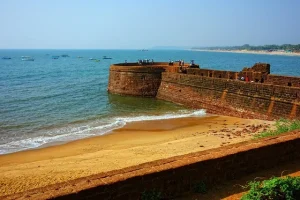
Photo by – Trodly
The lower Sinquerim bastion formed part of the wider Aguada defensive system, so it makes sense to visit both on the same outing. The bastion sits closer to the shoreline, where the Portuguese fortifications extended towards the sea. Its lower position creates a very different perspective from the hilltop fort above.
During the rains, waves can strike the rocks and lower walls with considerable force. Stay away from wet edges, avoid climbing onto exposed sections and follow all beach safety instructions. Do not rely on beach shacks or seasonal services being open. The best reason to visit is the relationship between the lower bastion, coastline and upper Aguada complex. This combined route is one of the most practical ways to understand how the defensive system worked.
Best for: Coastal history, photography and a combined Aguada visit.
-
Reis Magos Fort
By Rajib Ghosh – Own work, CC BY-SA 4.0, Link
Reis Magos is one of the most rewarding heritage places in Goa for travellers who want more than an open ruin. The site began as an Adil Shahi military outpost. After the Portuguese took control of Bardez, they constructed the fort in the 16th century and expanded it over time. It later served as a prison before being restored and reopened as a cultural centre.
Today, the fort offers maintained interiors, exhibits and wide views over the Mandovi River. The nearby Reis Magos Church adds another layer to the area’s history. Because it is a curated heritage site rather than an exposed hilltop ruin, Reis Magos can work well on a cloudy or lightly rainy day. Current timings should still be confirmed before leaving. From Candolim, it can be combined with Fort Aguada on a carefully paced day, although trying to add Chapora as well would make the route unnecessarily rushed.
Best for: History lovers, families and travellers interested in restored heritage.
-
Chapora Fort
Photo by – Trawell
Chapora Fort sits above the Chapora River and Arabian Sea, with open views across Vagator and the surrounding coastline. The present fort was rebuilt by the Portuguese in the 18th century, although the hill had strategic importance long before that. What remains today is largely an open laterite enclosure rather than a preserved interior monument.
The climb is short but exposed, and the surface can become uneven and slippery during the monsoon. There is limited shelter at the top, so avoid visiting during thunderstorms or strong winds. On a clear interval, the river, green hills and coastline make the effort worthwhile. Early morning or later afternoon is usually more comfortable than the middle of the day.
For guests in Acaso Nest apartments around Baga or Calangute, Chapora fits naturally into an Anjuna–Vagator outing rather than a Candolim heritage circuit.
Best for: Coastal views, shorter climbs and Anjuna–Vagator itineraries.
-
Corjuem Fort
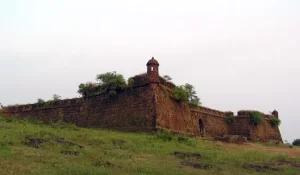
Photo by – Flickr
Corjuem Fort offers a smaller and quieter alternative to the better-known coastal forts in North Goa. Located near Aldona, the laterite structure overlooks the surrounding countryside and river landscape. The approach through village roads and across the Corjuem suspension bridge forms an important part of the outing.
The fort itself is compact, so it is better combined with time in Aldona than treated as a standalone destination. During the monsoon, the surrounding fields and vegetation become the main visual attraction. Move carefully along the ramparts and avoid unmarked edges. Photography works well from the fort, but drone use should be attempted only after checking current permissions and local restrictions.
Best for: Inland drives, village scenery and quieter heritage stops.
-
Alorna Fort
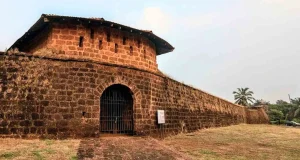
Photo by – Tripinic
Alorna Fort sits further inland in North Goa and once held strategic importance along the Chapora River system. Its history is connected to conflict involving the Sawant Bhonsles and the Portuguese, who took control of the fort in the 18th century. What survives today is quieter and less developed for tourism than Aguada, Reis Magos or Chapora.
That is part of the appeal, but it also means visitors should not expect a highly managed attraction. Road conditions, access and the state of the surrounding paths should be checked locally, particularly after heavy rain. Alorna is best included in an inland heritage day with enough time for the journey. It should not be added casually after a coastal fort circuit.
Best for: Repeat visitors, quieter heritage travel and inland exploration.
-
Tiracol Fort

By Mvkulkarni23 – Own work, CC BY 3.0, Link
Tiracol Fort, also written as Terekhol, sits at Goa’s northern edge overlooking the Tiracol River and the Arabian Sea. The fort was originally associated with the Sawant Bhonsles before coming under Portuguese control. It now operates as a heritage hotel, while parts of the property remain accessible to visitors during designated hours.
The journey is one of the main reasons to go. The route passes through quieter northern villages, and ferry access from the Querim side may form part of the trip depending on current operations. During the monsoon, confirm ferry services, road conditions and visitor access before leaving. Querim Beach can be added for a shoreline walk or sea views when conditions permit, but swimming should be avoided during rough weather. This is not a quick addition to another sightseeing day. Plan it as a separate northern excursion.
Best for: Slow travellers, far-north exploration and river views.
Where to Stay While Exploring North Goa’s Forts
The right base depends on which fort circuit matters most to you.
Acaso Nest Apartments in Baga and Calangute

For travellers looking for a rental apartment in Goa, Acaso Nest’s studio and one-bedroom apartments in the Baga–Calangute belt provide a practical base for Chapora, Vagator and the wider northern coastal circuit. The location also keeps restaurants, shops, Baga Beach and the area’s nightlife within convenient reach. After a fort outing, guests can return to a private apartment rather than building the entire day around a hotel schedule. Aguada and Reis Magos remain accessible as planned drives, but they should not be treated as part of the same quick neighbourhood circuit as Chapora.
Sublime Sands Beach Resort, Candolim

Sublime Sands Beach Resort in Candolim is better placed for Fort Aguada, the Sinquerim bastion and Reis Magos. The property has eight air-conditioned rooms, private balconies, an outdoor pool, garden areas, kitchenette facilities, parking and access towards Candolim Beach. These facilities become especially useful during the monsoon, when a fort outing may end earlier than planned.
Travellers comparing the best resorts in North Goa for a heritage-led trip should consider more than beach proximity. Road access to the fort circuit, a comfortable room to return to and enough within the property to enjoy a rainy afternoon matter just as much. Both accommodation formats are managed by Acaso Nest, allowing guests to choose between the independence of an apartment and the facilities of a smaller Candolim resort.
Explore Acaso Nest and Its Properties
Here’s What Our Guests Have Said
“Nice place, clean and neat. Prime location, walkable to Baga Beach. Very responsive helper, one call away for any help. Many restaurants are nearby and food can easily be ordered through Swiggy or Zomato if needed.”
Nitesh
Airbnb Review, Calangute Apartment, Acaso Nest
